Estrogen affects far more than menstrual periods, so low estrogen symptoms can show up in several parts of the body. Some people notice irregular periods or hot flashes, while others experience sleep changes, vaginal dryness, mood changes, or discomfort during sex. However, these symptoms are not specific to estrogen deficiency, which means testing and a medical evaluation may be needed to understand what is actually happening.
Estrogen levels also change naturally throughout life. For example, levels fluctuate during the menstrual cycle and generally decline during the transition to menopause. Meanwhile, certain medical conditions, medications, or treatments can also affect estrogen production.
What Does Low Estrogen Mean?
Estrogen is a group of hormones involved in reproductive health, bone health, the menstrual cycle, and many other body functions. Estradiol is the main estrogen during the reproductive years, while other forms become more prominent at different life stages.
Having a single low estrogen result does not automatically mean something is wrong. Instead, healthcare professionals interpret hormone levels alongside age, menstrual history, symptoms, pregnancy status, medications, and other test results.
Timing may matter as well because hormone levels naturally fluctuate. Therefore, anyone considering laboratory testing may find it useful to understand when is the best time to test for hormone imbalance before assuming that one result explains their symptoms.
Common Low Estrogen Symptoms
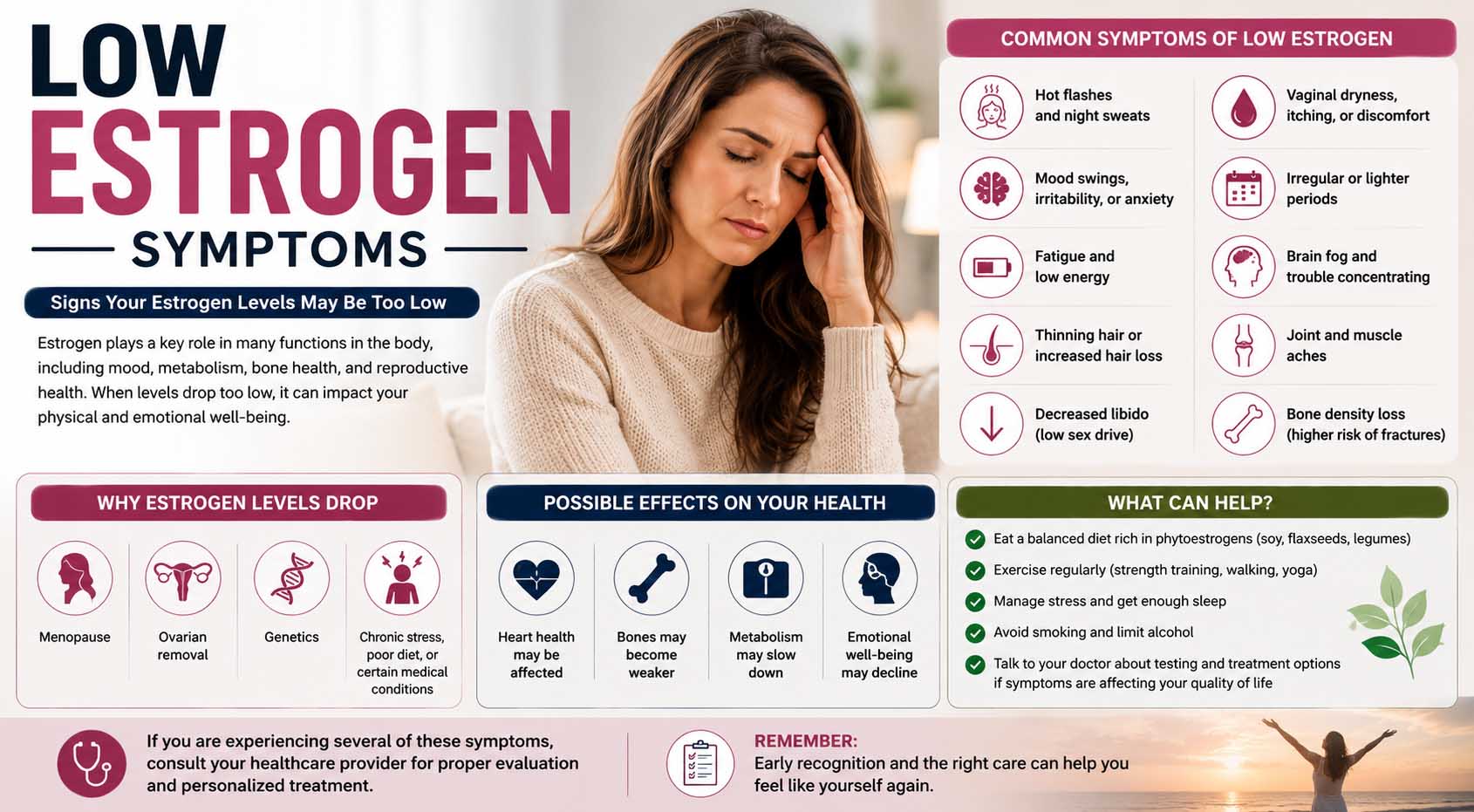
The symptoms of low estrogen can vary considerably from one person to another. Likewise, their severity depends partly on why estrogen has declined and how quickly the change occurred.
Commonly reported symptoms can include:
- Irregular, lighter, or absent menstrual periods
- Hot flashes
- Night sweats
- Vaginal dryness
- Discomfort or pain during sex
- Sleep difficulties
- Mood changes
- Reduced sexual desire
- Difficulty concentrating
- Headaches in some people
- Changes in urinary or vaginal symptoms
Some symptoms develop gradually. Consequently, a person may initially blame stress, poor sleep, aging, or changes in routine rather than considering a hormonal cause.
Changes in Menstrual Periods
Menstrual changes are among the more noticeable low estrogen symptoms in women who have not reached menopause.
Periods may become irregular, occur farther apart, become lighter, or stop altogether. However, pregnancy, significant weight changes, intense exercise, thyroid disorders, polycystic ovary syndrome, and other conditions can also affect menstruation.
Therefore, missed periods should not automatically be attributed to low estrogen.
Hot Flashes and Night Sweats
Hot flashes are sudden feelings of warmth that often affect the face, neck, and chest. Meanwhile, night sweats are similar episodes that happen during sleep and may be strong enough to disturb rest.
These symptoms commonly occur during perimenopause and menopause as hormone levels change. Still, other medical conditions and medications can cause excessive sweating or heat sensations, so persistent symptoms deserve appropriate evaluation.
Vaginal Dryness and Discomfort
Estrogen helps support vaginal tissue. Therefore, declining estrogen can make vaginal tissues thinner, drier, and less elastic.
As a result, some people experience dryness, irritation, burning, or pain during sexual activity. Urinary symptoms can occur as well.
Although these issues are common around and after menopause, they should not simply be ignored. Several treatments may help, and a healthcare professional can also rule out infections, skin conditions, or other causes.
Weird Symptoms of Low Estrogen: Are They Really Hormonal?
People sometimes search for weird symptoms of low estrogen because hormonal changes can seem unrelated to reproductive health.
For instance, someone may notice sleep disruption, problems concentrating, mood changes, headaches, or changes in sexual desire. Nevertheless, these symptoms have many possible causes.
Poor concentration may result from inadequate sleep, stress, medication effects, depression, anxiety, or other health problems. Likewise, headaches can occur for numerous reasons.
Therefore, unusual symptoms should be considered in context rather than treated as proof of low estrogen. A combination of symptoms, medical history, and appropriate testing provides much more useful information.
What Causes Low Estrogen?
Low estrogen is not a single condition. Instead, several normal life stages and medical situations can reduce estrogen levels.
Perimenopause and Menopause
Menopause is a major natural cause of lower estrogen. Before menopause, however, people typically go through perimenopause, during which hormone production becomes more variable.
Consequently, periods may become unpredictable while hot flashes, night sweats, vaginal symptoms, or sleep difficulties develop.
Menopause is generally recognized after 12 consecutive months without a menstrual period when another cause does not explain the absence of menstruation.
Ovarian Conditions or Treatments
Because the ovaries produce much of the body’s estrogen during the reproductive years, conditions affecting ovarian function can result in low levels.
Likewise, surgical removal of both ovaries causes a substantial decrease in ovarian hormone production. Certain cancer treatments can also affect ovarian function.
People undergoing such treatments should discuss hormone-related symptoms and long-term health considerations with their medical team.
Low Energy Availability and Intense Exercise
Very low calorie intake, substantial weight loss, eating disorders, or intense exercise without adequate energy intake can interfere with reproductive hormone signaling.
Consequently, menstrual periods may become irregular or disappear. This situation deserves medical attention because prolonged hormonal disruption can affect bone health.
Rather than simply trying to increase estrogen independently, addressing nutrition, exercise load, and any underlying condition is generally part of professional management.
Pituitary or Hypothalamic Problems
The ovaries rely on signals from the brain to regulate reproductive hormones. Therefore, conditions affecting the hypothalamus or pituitary gland can interfere with normal estrogen production.
This is one reason doctors may order several laboratory tests instead of measuring estrogen alone.
Symptoms of Low Estrogen in Women at Different Ages
The symptoms of low estrogen in women can mean different things depending on age and life stage.
For a younger adult, absent periods combined with low estrogen could warrant evaluation for factors such as low energy availability, ovarian dysfunction, or problems affecting hormonal signaling.
During the 40s and 50s, meanwhile, changing estrogen levels are commonly associated with perimenopause and menopause. Symptoms may include irregular menstruation, hot flashes, sleep disturbance, and vaginal changes.
After menopause, low estrogen is expected physiologically. However, symptoms such as vaginal dryness and urinary discomfort can persist or appear later.
Therefore, age and reproductive history provide essential context when interpreting symptoms.
Can Low Estrogen Affect Ovulation and Fertility?
Estrogen plays an important role in the menstrual cycle and reproductive function. Consequently, hormonal conditions associated with inadequate estrogen production can sometimes interfere with normal ovulation.
However, irregular periods or difficulty conceiving can have many causes. Therefore, people trying to identify ovulation at home should understand the best time to take ovulation test while recognizing that home tests do not diagnose low estrogen.
A fertility evaluation may include menstrual history, hormone testing, imaging, and other assessments depending on the circumstances.
If pregnancy is possible and a period is late, checking for pregnancy is usually more useful than assuming hormonal deficiency. In that situation, knowing when is the best time to take a pregnancy test morning or night can help improve the usefulness of home testing.
How Doctors Diagnose Low Estrogen
Diagnosis starts with the overall clinical picture rather than symptoms alone.
A healthcare professional may ask about menstrual cycles, hot flashes, sexual symptoms, medications, pregnancy possibility, exercise habits, nutrition, recent weight changes, medical conditions, and previous treatments.
Depending on the situation, blood tests may measure estradiol along with other hormones such as follicle-stimulating hormone (FSH) and luteinizing hormone (LH). Thyroid testing or pregnancy testing may also be appropriate when symptoms overlap with other conditions.
In younger people with absent periods, the evaluation may look different from an assessment for someone experiencing typical menopausal symptoms.
Because hormone concentrations can fluctuate, one laboratory number should not be interpreted without clinical context.
Possible Health Effects of Persistently Low Estrogen
Estrogen contributes to maintaining bone tissue. Therefore, prolonged estrogen deficiency, particularly when it occurs earlier than expected, can contribute to reduced bone mineral density.
This issue can be relevant for people with prolonged absence of menstrual periods caused by certain hormonal or nutritional problems. Likewise, the decline in estrogen after menopause contributes to age-related changes in bone health.
Low estrogen can also affect vaginal and urinary tissues. As a result, dryness, irritation, discomfort during sex, urinary urgency, or recurrent urinary problems may become concerns for some people.
Still, individual health risks depend on many factors. Therefore, a healthcare professional can assess personal risk rather than relying on symptoms alone.
How Are Low Estrogen Symptoms Treated?
Treatment depends on the cause, age, symptoms, medical history, and individual risk factors.
For menopausal symptoms, hormone therapy can be an option for some people. However, it is not appropriate for everyone, and the choice of medication, dose, route, and duration requires an individualized discussion with a qualified clinician.
For vaginal symptoms related to menopause, local vaginal treatments may be considered. Depending on the individual, options can include nonhormonal moisturizers and lubricants as well as prescription therapies.
Meanwhile, when low estrogen results from inadequate nutrition or excessive exercise, treatment may focus on restoring adequate energy intake and addressing the underlying cause.
If a medication or medical treatment contributes to symptoms, patients should speak with their healthcare team rather than stopping treatment on their own.
Lifestyle Habits That Support Overall Health
Lifestyle changes cannot correct every cause of low estrogen. However, several everyday habits support general health while the underlying issue is being assessed or treated.
Regular weight-bearing and resistance exercise can support bone health. Likewise, adequate nutrition helps provide the protein, vitamins, minerals, and energy the body needs.
Calcium and vitamin D requirements vary with age, diet, health status, and other factors. Therefore, ask a healthcare professional whether dietary changes or supplements are appropriate rather than taking high doses without guidance.
Sleep habits matter as well. Keeping a consistent sleep schedule, limiting late caffeine, and creating a cooler sleeping environment may help some people who experience sleep disturbance or night sweats.
For vaginal dryness, over-the-counter vaginal moisturizers or lubricants may provide symptom relief for some people. However, persistent pain, bleeding, or irritation should be evaluated.
When Should You See a Healthcare Professional?
Consider seeking medical advice if symptoms are persistent, worsening, or affecting daily life.
Evaluation is especially appropriate if periods stop unexpectedly, menopausal-type symptoms appear at an unusually young age, vaginal symptoms become painful, fertility is a concern, or unexplained symptoms continue despite basic self-care.
You should also seek medical guidance if you develop bleeding after menopause. Although there are several possible causes, postmenopausal bleeding needs medical evaluation.
Meanwhile, severe or sudden symptoms should not automatically be blamed on hormones. Chest pain, severe shortness of breath, fainting, sudden neurological symptoms, or other signs of a medical emergency require urgent care.
FAQs About Low Estrogen Symptoms
Can low estrogen make you tired?
Fatigue can occur alongside hormonal changes, especially when hot flashes or night sweats disrupt sleep. However, fatigue has many possible causes, including anemia, thyroid problems, infections, medication effects, sleep disorders, and stress. Therefore, persistent fatigue deserves broader evaluation.
Does low estrogen cause weight gain?
Changes in body composition and weight commonly occur around midlife, but estrogen is only one factor. Aging, activity level, sleep, diet, genetics, and other hormonal changes also play roles. Therefore, unexplained or rapid weight changes should not automatically be attributed to estrogen.
Can low estrogen affect mood?
Hormonal fluctuations may contribute to mood changes in some people, particularly during perimenopause. However, persistent anxiety, depression, or major mood changes can have many causes and deserve appropriate professional support.
Can you have low estrogen and still get periods?
Yes. Estrogen levels naturally fluctuate during the menstrual cycle, while some conditions can produce irregular hormone patterns without immediately stopping menstruation. Therefore, symptoms and a single laboratory result need to be interpreted in context.
Can I raise estrogen naturally?
There is no single food, supplement, or lifestyle technique that reliably treats every cause of clinically low estrogen. Instead, management should address the reason estrogen is low. For example, nutritional rehabilitation may be relevant when inadequate energy intake is involved, while menopause-related symptoms may require a different approach.
Practical Next Steps
If you recognize several low estrogen symptoms, avoid trying to diagnose yourself from symptoms alone. Start by noting menstrual changes, hot flashes, sleep problems, vaginal symptoms, medications, and any major changes in exercise, nutrition, or body weight.
Then, discuss persistent or concerning symptoms with a qualified healthcare professional. Depending on your age and circumstances, they can determine whether hormone testing or another evaluation is appropriate.
Most of all, treatment should match the underlying cause rather than simply target an estrogen number. With the right evaluation, you can better understand whether estrogen is actually involved and choose symptom-management or treatment options based on your individual health needs.